
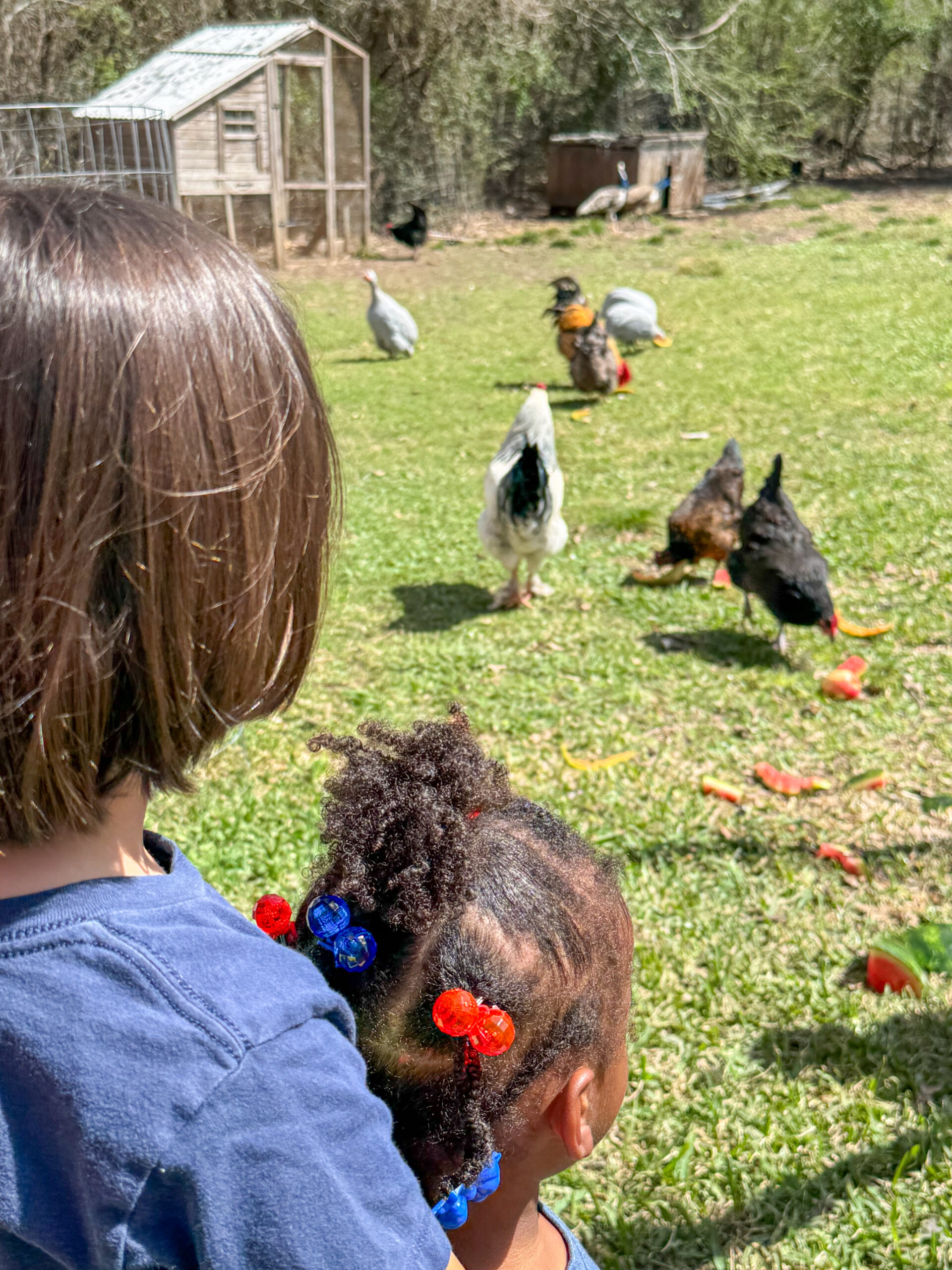
Nature as a Classroom: Easy Ways to Take Homeschooling Outdoors
Making Nature Part of Our Homeschool
As an amazon affiliate I earn from qualifying purchases
When I first began thinking seriously about homeschooling, one of the biggest reasons I felt drawn to it was simple: I wanted my children to have time to love nature.
I didn’t want their days to be so structured and packed that there was little room left for wandering through the woods, watching birds, getting dirty, collecting treasures, or simply noticing the world around them.
And as it turns out, nature has become one of the most meaningful parts of our homeschool.
From the time my daughter was an infant, she had a natural curiosity about the outdoors. I remember watching her stare up at the treetops, completely captivated by the movement of the leaves and the way sunlight filtered through the branches.
As a toddler, she and her brother would take their grabber reacher tools to our local park and pick up trash.
Now, at eight years old, she has become our little naturalist. She loves creating wildlife paintings and making videos where she teaches others about plants, animals, and the earth. She dreams of helping people notice the beauty of nature and understand why keeping our outdoor spaces clean and protected matters.
And the best part?
I didn’t have to teach her to love nature.
I simply gave her plenty of opportunities to experience it.
We spend time outdoors most days, often exploring the woods, and I’ve learned that some of the richest learning happens when I step back and let their curiosity lead.
As my children have gotten older, I’ve looked for even more ways to bring the outdoors into our everyday lives. These activities have naturally grown from the things they’re already interested in.
OUTDOOR LEARNING
- Taking nature field guides on hikes:
One of the simplest things we’ve added to our outdoor adventures is bringing along nature field guides.
I was surprised by how much my kids enjoy stopping to look up the birds, plants, and trees they encounter.
There are plenty of wonderful apps available, but I love that field guides give them a reason to put the phone away and interact directly with their surroundings.
A hike can quickly turn into a scavenger hunt, a bird-watching expedition, or an impromptu botany lesson.
And I don’t have to plan any of it.
- Playing in the woods:
Sometimes the best outdoor learning doesn’t look like learning at all.
Give my kids access to the woods and their imaginations take over. They’ll build, climb, explore, collect things, create games, and turn fallen branches into just about anything they can imagine.
When we have friends to join us or a new place to explore, we’ll often spend three or four hours outside on the weekend.
There are no worksheets required. Just space, time, and the freedom to explore.
- Planning and planting a garden:
Gardening has become another wonderful way for our family to connect with nature.
We work together in the yard, watering plants, checking on what we’ve recently planted, and watching things grow.
And I’ve found that children are much more interested in trying herbs and vegetables when they get to be part of the process.
There is something magical about picking something you’ve grown yourself and eating it right away.
- Playing sports:
Outdoor learning doesn’t have to mean identifying plants or studying wildlife.
Sometimes it’s simply moving your body and having fun together.
Even something as simple as passing a ball back and forth can create positive associations with being outdoors and active.
Our family recently started playing pickleball together, and it’s been such an easy way to get outside and spend time together.
- Painting and drawing objects in nature:
When my kids are interested in creating art, I try to give them materials and then get out of the way.
Sometimes we’ll bring paper and paint outside and draw or paint something we see. Other times, simply having chalk available is enough to spark an idea.
I don’t require them to create a nature journal or complete a specific project.
The goal isn’t to turn every outdoor experience into an assignment.
It’s to give them opportunities to notice something beautiful and want to create.
- Take up hobbies in nature:
As children grow, their interests naturally change—and those interests can become wonderful invitations to spend more time outdoors.
Recently, my kids have become interested in fishing, roller skating, biking, and metal detecting.
Each hobby gives them a different reason to get outside, move their bodies, observe their surroundings, and learn something new.
That’s one of my favorite things about an unschooling approach: learning can follow the interest instead of the lesson plan.
FOREST SCHOOL
I also noticed that my son, who loves working with his hands and figuring out how things work, needed an outlet for that side of himself.
That’s when we discovered forest school.
I honestly didn’t realize how much we needed something like this in our homeschool.

At forest school, he’s had the opportunity to learn practical skills that would be difficult to recreate in our backyard.
He’s learned how to safely chop wood with an ax, how to start a fire, and how to be around bees without fear.
More than anything, it’s given him a deeper connection to the natural world.
Instead of simply learning about nature, he’s learning through it.

Why Nature Matters in Our Homeschool
Spending time outdoors isn’t just something we do because it’s fun.
Nature provides children with opportunities to use their senses, move their bodies, solve problems, develop fine and gross motor skills, practice social skills, and build confidence.
It also gives them something that can be hard to find in a busy, structured world: space.
Space to wonder.
Space to get bored.
Space to create.
Space to take risks.
Space to notice the tiny things we often rush past.
And perhaps most importantly, spending time in nature can help children develop a genuine appreciation for the world around them. When children feel connected to something, they’re much more likely to want to care for it.
My daughter didn’t need a lesson on why nature matters before she wanted to pick up trash at the park. She first developed a relationship with the outdoors—and her desire to protect it grew naturally from there.
You Don’t Need Another Curriculum
The next time you’re looking for a homeschool activity and feel tempted to search Pinterest for the perfect project, buy another workbook, or find something new to “strew,” try something much simpler.
Go outside.
Find a park.
Walk through the woods.
Visit a botanical garden.
Explore an open field.
Sit under a tree.
Bring a field guide.
Take a magnifying glass.
Or bring absolutely nothing at all.
You might be surprised by what your children discover when you give them the freedom to explore without an agenda.
Because sometimes the best homeschool lesson isn’t something you prepare.
Sometimes it’s the world right outside your door.
Some great websites for more information on the benefits of getting out in nature.
https://pmc.ncbi.nlm.nih.gov/articles/PMC9754067/#ack1
Ready for a more peaceful approach to homeschooling?
Download my free unschooling questionnaire and start creating a homeschool that feels more connected, joyful, and aligned with your family.
Discover more from Peaceful Purpose
Subscribe to get the latest posts sent to your email.


-
-
3 months
Tagged family, home-education, homeschool, homeschooling, language