
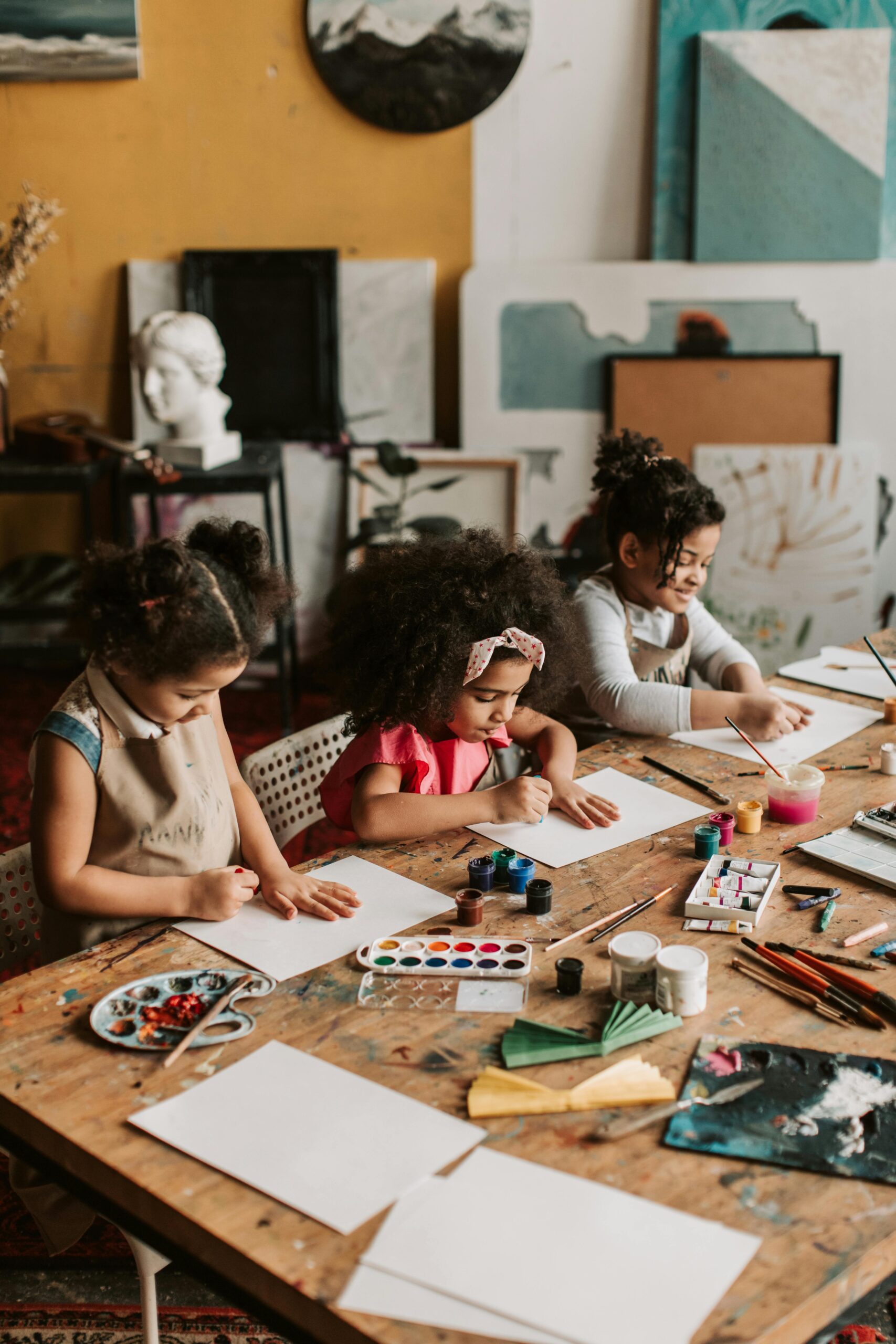
Our Unschooling Homeschool Routine: A Day in the Life
“And in the end, it’s not the years in your life that count. It’s the life in your years.”
— Abraham Lincoln
One of the things I love most about unschooling is that our days don’t have to look the same every day.
We have rhythms rather than a rigid schedule. There are certain things that anchor our days—meals, outside time, classes, rest—but there is plenty of space in between for our children to follow their interests, play, create, and simply enjoy being together.
At this stage of our journey, we have an 8-year-old, a 5-year-old, and a 2-year-old, so our days are also shaped by the very different needs and rhythms of three children.
Here’s what a typical day might look like for us.
5:00–5:30 AM | Starting My Day
I try to get up before the kids so I can have a little quiet time for myself.
Depending on the day, I’ll meditate, read the Bible, journal, or simply sit quietly with my thoughts.
I’ve found that how I begin my morning can have a big impact on how I show up for my children. I don’t always get this time to myself, of course, but when I do, I really value it.
6:00–7:00 AM | Movement
I usually spend about 45 minutes exercising.
Some days that’s weightlifting or walking. Other days it’s an aerobics class, yoga, Pilates, or another kind of intentional movement.
I try to get myself ready for the day before everyone else is up, but with three kids, that doesn’t always happen—and that’s okay.
6:45 AM | A Slow Start
My son is often the first one awake.
We’ll talk, have a morning snack, or read a book together while the house is still quiet.
I don’t feel the need to immediately start our “school day.”
Our learning begins with connection.
7:30 AM | Breakfast & Morning Conversations
I start making breakfast and the girls begin waking up.
The kitchen often becomes a gathering place where conversations naturally turn into learning.
We might listen to our read-aloud book while we’re eating or cooking. My oldest might tell me about something she’s working on or ask for help with a project.
I’ve also noticed that she tends to be especially creative first thing in the morning and again before bed, so I try to pay attention to those natural rhythms rather than insisting that creativity happen at a particular time.
9:00 AM | Following Individual Goals
My oldest has an online reading class four mornings a week because learning to read is something she has chosen as a goal for herself.
This is an important distinction for us.
I’m not assigning reading because I believe she should be at a certain level by a certain age. She’s interested in becoming a reader because there are things she wants to access independently.
That motivation makes a difference.
10:00–11:00 AM | Exploring Interests
If we’ve talked about something interesting the day before, I may pull out books, materials, or activities related to it.
Sometimes we’ll explore science or history. Sometimes I’ll set out a math game or some other materials and see what captures their attention.
And sometimes…
They just want to play.
So they play.
“Play is the work of the child.”
— Maria Montessori
This is one of the things I’ve had to learn to trust.
I don’t need to turn every hour into an educational activity. Children are learning through their play, their conversations, their experiments, and their attempts to understand the world around them.
Sometimes we use curriculum, too. But I’ve found that when a curriculum becomes something we simply have to endure, it’s probably time for me to step back and reconsider whether it’s actually serving us.
And Our Toddler?
Our 2-year-old happily joins in with almost everything.
She loves Play-Doh, drawing with pens and dry-erase markers, and playing with math manipulatives.
I don’t create separate “lessons” for her.
She sees what the older kids are doing and naturally wants to participate.
11:00 AM–1:00 PM | Outside Time
We try to spend a good part of our day outside.
Sometimes we’re at the park. Sometimes we’re exploring nature. Sometimes we’re meeting friends for a playdate.
If we’re out with friends, my oldest will sometimes bring whatever she’s currently reading and spend a little time reading with me.
The rest of the time?
They run, climb, play, explore, talk, and do what kids do.
Outside time is one of our anchors.
2:00–4:00 PM | Rest, Hobbies & Free Time
After lunch, our afternoons can look completely different from one day to the next.
My oldest might have an extracurricular activity or spend time in her room drawing, reading, or listening to music.
My middle child might build something or play.
Our youngest usually takes a nap.
During naptime, the older kids may have some screen time.
I don’t try to make every moment productive.
Rest, hobbies, independent play, and downtime are part of our homeschool, too.
4:00 PM | Snack & “What’s Next?”
Around 4:00, we usually come back together for a snack and talk about what everyone wants to do for the rest of the afternoon.
Sometimes we’re meeting friends at the park.
Other times someone has an idea for a project.
One afternoon, the kids decided they wanted to make Christmas cards for family.
So we pulled out the cardstock, craft supplies, stickers, markers, and washi tape and got to work.
It turned into a completely natural opportunity for purposeful writing.
They weren’t practicing handwriting because I told them to.
They were writing because they had something they genuinely wanted to communicate.
Those are some of my favorite learning moments.
6:00–8:00 PM | Dinner & Real-Life Learning
Dinner and our evening routines happen around this time.
Lately, my kids have become much more interested in helping in the kitchen, which I absolutely love.
They’re finally getting old enough to actually help rather than just make more work for me. 😂
They can measure ingredients, mix, chop with appropriate supervision, read recipes, help prepare food, and clean up.
Cooking is one of those everyday activities that naturally incorporates math, reading, science, sequencing, problem-solving, and practical life skills.
But more importantly, they’re contributing to our family.
7:00–9:00 PM | Creative Time
Some evenings, the kids suddenly get a burst of creativity.
They’ll head over to our art area and start pulling out cardboard, recyclables, tape, markers, and whatever else they can find.
Right now, they’re especially interested in creating “inventions.”
I love watching this process because I get to see how their minds work.
They design something.
It doesn’t work.
They change it.
They try again.
They explain their idea to me.
They make improvements.
There’s engineering, creativity, communication, problem-solving, and persistence happening right in front of me.
And nobody had to assign it.
8:30–9:00 PM | Bedtime… Usually
We do have bedtimes in our home, but we’re also flexible.
If we’re having a movie night, watching sports, spending time with friends, or the kids are deeply engaged in playing together, bedtime might shift a little later.
Lately, football has been a big interest in our house.
And naturally, that interest has led to all kinds of learning—understanding the rules, scoring, timekeeping, athleticism, teamwork, strategy, marketing, and even the business side of professional sports.
This is one of my favorite things about unschooling.
You never know where an interest will lead.
Our Days Have a Rhythm, Not a Schedule
Although our days look different from one another, we do have a rhythm.
Our main anchors are:
- Mealtimes
- Outside time
- Scheduled classes and activities
- Nap or quiet time
- Bedtime
Everything else has room to move.
That flexibility allows each child to pursue their own interests while still giving our family enough structure to function.
And as our children grow, our rhythm changes with them.
We talk about what’s working, what’s not working, what each person needs, and what we want our days to look like.
Our homeschool routine isn’t something I created for my children. It’s something we’ve created together.
Why I Prefer Rhythm Over a Rigid Routine
I used to think a successful homeschool day meant getting through everything I had planned.
Now I think about it differently.
A successful day might be the day my child spends two hours building an invention.
Or the day we spend an afternoon outside with friends.
Or the day someone becomes fascinated with football and wants to learn everything about it.
Or the day my daughter decides she wants to practice reading because she has a book she desperately wants to read on her own.
There is still structure in our home.
There are still responsibilities, boundaries, classes, and routines.
But there is also space for life to happen.
And that space is where so much of our learning happens.
For us, unschooling isn’t about having no routine.
It’s about creating a rhythm that leaves room for connection, curiosity, play, rest, and pursuing the things that matter to each of us.
Because I don’t want to spend these years rushing my children through a checklist of things they need to learn.
I want to make sure we’re actually living them.
What does a typical day look like in your homeschool?
Do you thrive with a structured schedule, or does a flexible rhythm work better for your family?
And if your routine isn’t serving your family right now, maybe the question isn’t “How can I make us stick to the schedule?”
Maybe it’s:
“What kind of rhythm would allow our family to enjoy our days more?”
Discover more from Peaceful Purpose
Subscribe to get the latest posts sent to your email.


-
-
3 months
Tagged family, home-education, homeschool, homeschooling, language